

Introduction to variable speed control
LToday, variable speed drives are an essential part of modern industrial environments. Whether it's to optimize energy consumption, improve process precision or extend machine life, variable speed drives play a central role. But with so many different models to choose from, how do you select the one that best suits your needs? This article offers a clear guide to help both novices and experts in their choice, taking into account the specific features of different industrial sectors.
What is a variable speed drive and why is it essential in industry?
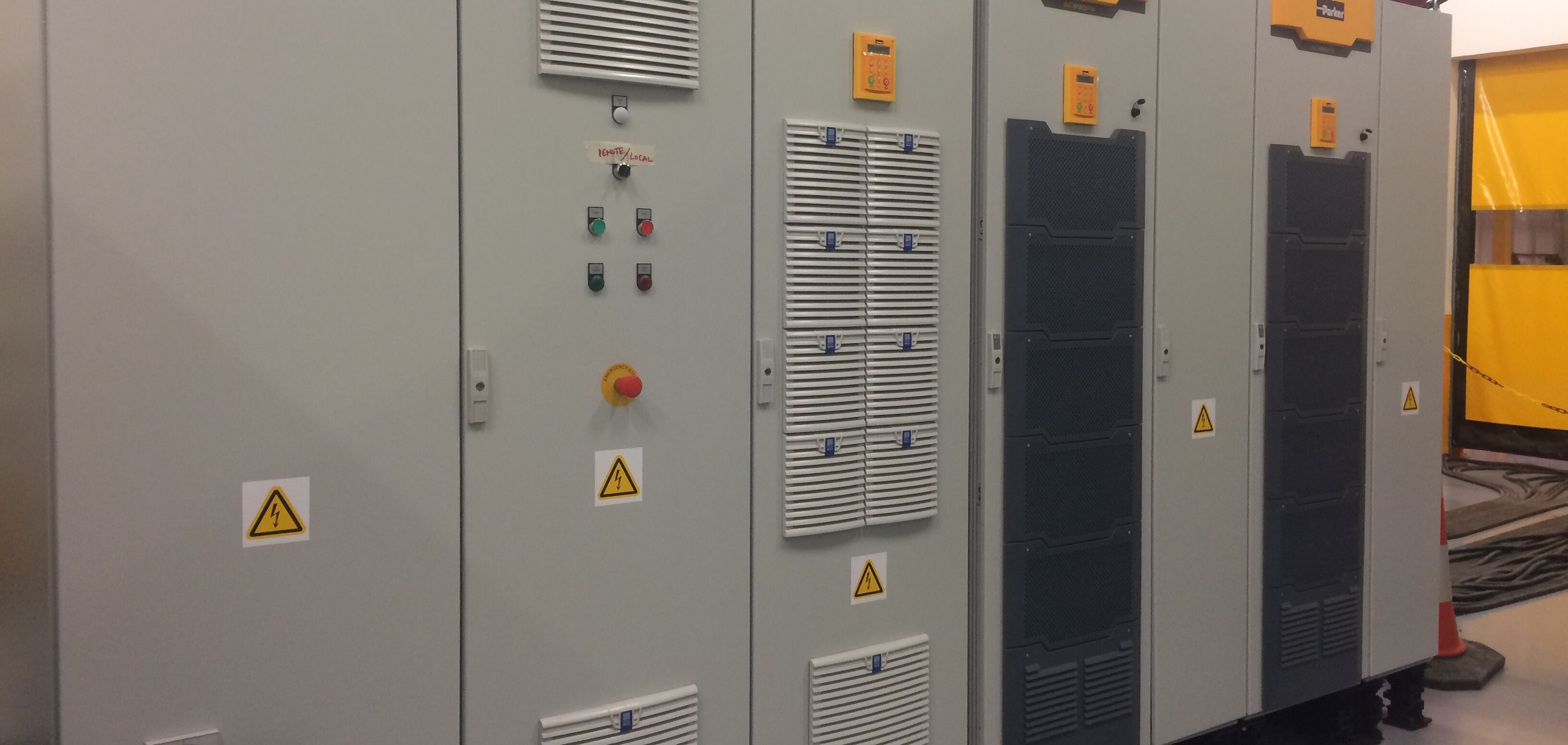
Un variateur de vitesse industriel est un dispositif électronique qui permet de contrôler la vitesse et le couple d’un moteur électrique. Il joue un rôle stratégique dans la modernisation des lignes de production :
Reduced energy costs: up to 30 % savings thanks to adaptation of actual motor speed to requirements.
Improved machine life: soft start-up, reduced mechanical shocks and optimized work cycles.
Flexibility and precision: real-time adaptation of speed to meet industrial process requirements.
👉 Example: in the wiringIt ensures constant coil voltage. In the plastics processingIt precisely regulates extruder speed.
Technical criteria for choosing the right variable speed drive
Before selecting a drive, it is essential to analyze several parameters:
- Motor power and current The drive must be sized according to the rated power (kW/HP) and current input.
- Load type :
- Constant load (pumps, fans).
- Variable load (conveyors, extruders).
- High inertia loads (test benches, presses, heavy machinery).
- Power supply 230 V single-phase or 400 V three-phase.
- Environmental conditions dust, humidity, heat → choose the right protection rating (IP20, IP55, IP65).
- Integrated functions :
- Vector control for greater precision.
- Industrial communication (Modbus, Profibus, Profinet, Ethernet/IP).
- Integrated safety (STO function - Safe Torque Off).
👉 Case in point: a variable speed drive for printing should give priority to precision and regularity of speed, while a variable speed drive for the metalworking must support heavy, continuous loads.
Examples of concrete applications
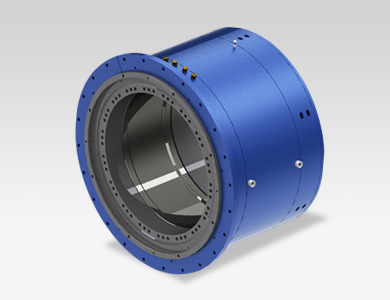
Variable speed drives are used in a multitude of industrial sectors. On a conveyor line, they regulate flow and prevent overloads. In pumping, they adjust the flow rate according to demand, drastically reducing energy consumption and limiting operating noise. Machine tools benefit from precise speed control, which improves machining quality and reduces production scrap.
A typical case observed in industry concerns oversized pumping stations: by simply adding a variable speed drive, some companies have seen a reduction in their energy bill of over 40 %, while stabilizing their process.
Adapting the variable speed drive to your sector of activity
Each industrial sector has its own specific requirements. Here are some recommendations:
- Test benches high-performance inverter, torque control and the ability to simulate different load scenarios.
- Wiring Perfect motor synchronization to avoid cable breakage or twisting.
- Printing Variable speed drive guarantees constant, precise speed for impeccable results.
- Metallurgy Robust drive, capable of handling intensive loads and extended cycles.
- Plastics processing (extruders, presses) Variable speed drive with precise torque control, designed for continuous operation.
- Special machines A customized, scalable, communicating solution for integration into complex processes.
Anticipating maintenance and ensuring scalability
Choosing an inverter is not just a matter of comparing technical features. You also need to consider the longevity of your investment:
- Technical support and spare parts : choose manufacturers offering responsive after-sales service.
- Software updates to take advantage of the latest features.
- Compatibility with your PLCs and networks A well-documented, open drive avoids additional integration costs.
- Scalability Think about your future needs (line extensions, new loads, increased automation).
👉 In short, a well-chosen drive is a lever for productivity, reliability and energy efficiency in any industrial sector.
FAQ – Variateur de vitesse : les questions les plus fréquentes
À quoi sert un variateur de vitesse en industrie ?
Un variateur de vitesse permet de contrôler précisément la vitesse et le couple d’un moteur électrique. Il contribue à réduire la consommation énergétique, augmente la durée de vie des machines et améliore la précision des procédés industriels. [techdrive.fr]
Comment choisir la puissance d’un variateur de vitesse ?
La puissance du variateur doit être adaptée à la puissance nominale du moteur (kW/HP) et au courant qu’il absorbe. Un mauvais dimensionnement peut entraîner des surchauffes ou une usure prématurée du moteur. [techdrive.fr]
Quelle différence entre une charge constante, variable ou à forte inertie ?
- Charge constante : pompes, ventilateurs
- Charge variable : convoyeurs, extrudeuses
- Charge à forte inertie : presses, bancs d’essai.
Chaque type de charge nécessite un variateur aux capacités de contrôle spécifiques.
Quel indice de protection IP choisir pour un variateur ?
- IP20 : milieux propres, armoires électriques
- IP55 / IP65 : environnements poussiéreux, humides ou exposés
Le choix dépend des conditions environnementales dans lesquelles le variateur sera installé.
Quelles fonctions avancées peuvent être utiles ?
Certaines fonctionnalités apportent un gain de performance :
- Contrôle vectoriel pour une meilleure précision
- Fonction STO (Safe Torque Off) pour la sécurité
- Protocoles de communication : Modbus, Profibus, Profinet, Ethernet/IP
Ces options facilitent l’intégration dans une chaîne industrielle moderne.
Quels secteurs utilisent le plus les variateurs de vitesse ?
Les variateurs sont particulièrement utilisés dans :
- la plastics processing (contrôle précis d’extrudeuses),
- la wiring (gestion de tension des bobines),
- le transport de matériaux (convoyeurs),
- le pompage et la ventilation (optimisation énergétique)
Un variateur peut‑il réduire la consommation électrique ?
Oui, un variateur bien dimensionné permet une réduction de la consommation allant jusqu’à 30 %, en adaptant la vitesse réelle du moteur aux besoins de l’application.
Comment assurer une bonne maintenance du variateur ?
Pour garantir sa longévité :
- assurez un bon refroidissement et une ventilation adaptée ;
- utilisez des modèles compatibles avec les systèmes de supervision ;
- surveillez les diagnostics internes et alarmes.
Les variateurs récents facilitent la maintenance grâce à leurs capacités de communication.
Quelle alimentation choisir : 230 V ou 400 V ?
Le choix dépend de votre infrastructure électrique :
- 230 V monophasé pour de petites puissances
- 400 V triphasé pour les installations industrielles
Il est essentiel d’assurer la compatibilité entre le réseau et le variateur.
Besoin d’aide pour dimensionner votre variateur ?
Nos experts TECH DRIVE vous accompagnent dans le choix du variateur adapté à votre moteur et à votre environnement industriel.
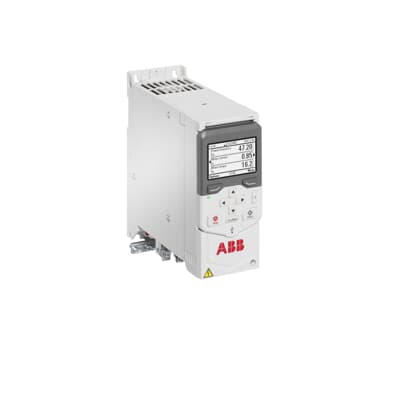
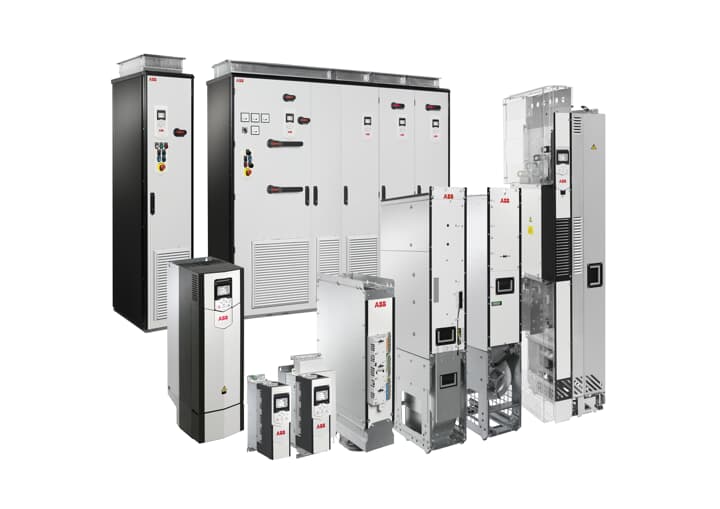
👉 Explore our range of Parker Hannifin industrial variable speed drives & ABB industrial variable speed drives and find the ideal solution to optimize your processes.